Before You Put Pen to Paper: Five Questions Every Commercial Tenant Should Ask First
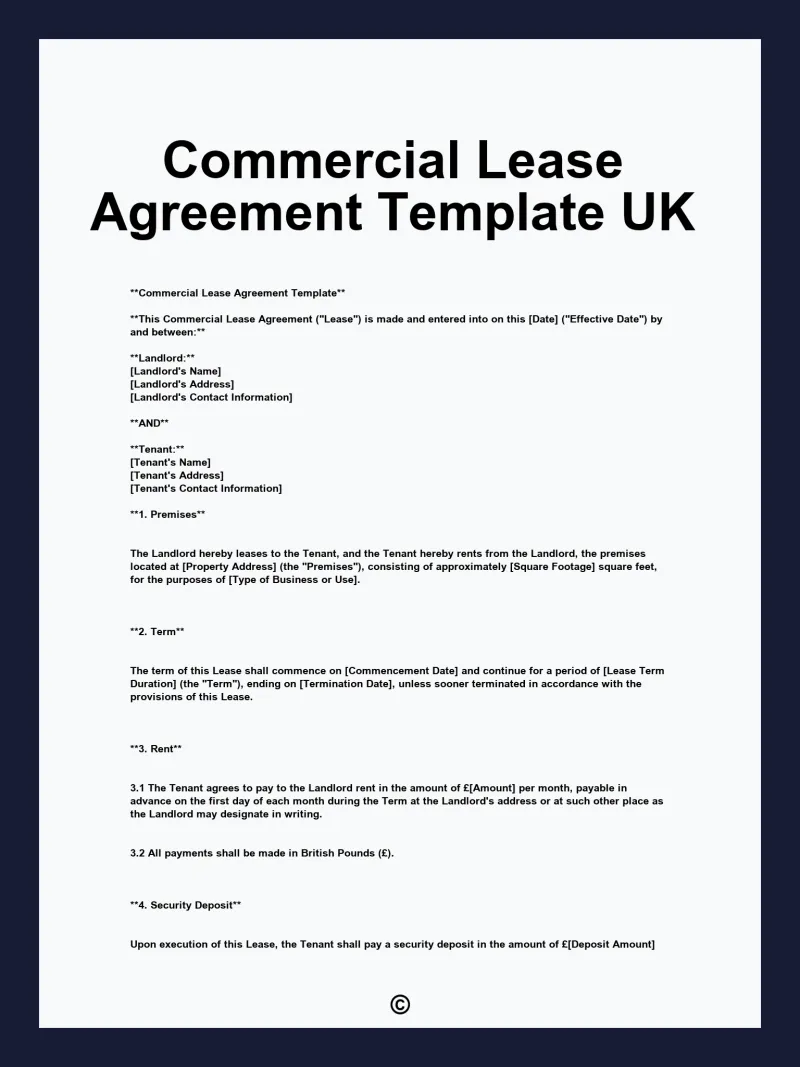
Photo: commercial property lease signing business premises UK, via templatestoolkit.com
Moving out of a home office or a serviced workspace into a leased unit feels like a milestone, and it is. It is also one of the few moments in a business's life where a single signature can create obligations measured in tens of thousands of pounds over five years or more. Yet most first-time commercial tenants in the UK sign with only a vague sense of what they have agreed to.
The lease itself will be drafted by the landlord's solicitor and will not volunteer its dangers. The agent acting for the landlord is not there to protect you. So the burden falls on the tenant to ask the right questions — and here are the five that matter most.
1. What Exactly Am I Paying Beyond the Rent?
The headline rent is only the beginning. Most commercial leases in the UK carry service charges — the landlord's costs of maintaining common parts, structure, insurance and management, passed on to tenants. On multi-let estates these can add 10–25% to the annual outlay, and unlike rent, they are not fixed.
Ask for the last two years of service charge accounts, the schedule outlining how costs are apportioned, and whether there is a cap. Ask specifically about the landlord's management fee — a percentage add-on that varies widely and is often negotiable. A unit that looks £2,000 a year cheaper than its neighbour may in fact be considerably more expensive once the service charge is examined properly.
2. Is There a Break Clause, and Is It Real?
A break clause gives the tenant the right to end the lease early — invaluable for a growing business whose space needs are uncertain. But not all break clauses are equal.
Check three things: the notice period (six months is common and must be diarised; missing it by a day forfeits the right); the conditions attached (some require the tenant to have paid all sums due, disputed or not, and to have complied with every covenant — a high bar); and whether the break is personal to your company or assignable if you restructure.
A break clause that is conditional on flawless compliance is often worth less than no break clause at all, because at least then you know where you stand.
3. Who Is Responsible for the Fit-Out?
The division of fit-out responsibility varies enormously and is frequently misunderstood. Who installs the power, lighting, flooring, kitchenette and partitioning? Who pays for compliance — fire risk assessments, air conditioning inspections, electrical testing — once you are in?
A bare shell unit with an FRI (full repairing and insuring) lease can mean the tenant funds everything, then maintains it all, then hands it back in repair. Get the landlord's contribution — if any — agreed in writing before heads of terms are signed, not after.
4. What Will Dilapidations Cost Me at the End?
Dilapidations — the landlord's claim for the cost of returning the property to its required condition — are the single most underestimated liability in commercial leasing. A tenant who fitted out a unit to a high standard may be required to strip it all out at the end of the term and reinstate the original layout.
Ask whether the lease permits improvements to be left in place, whether a schedule of condition can be attached (limiting your repairing obligation to the state of the property at the grant of the lease — essential for older buildings), and what the landlord's typical claims look like on the estate. Claims in the tens of thousands are not unusual, and they arrive just when the business is absorbing the cost of moving.
5. What Happens If I Need to Leave, Sell or Grow?
Finally, consider the exit and expansion routes. Is there a right to assign the lease or underlet part of the premises? Is there a rent review mechanism, and is it upward-only? If the business doubles and needs the unit next door, is there a right of first refusal on adjacent space?
These questions feel premature on day one. They are precisely the questions a tenant wishes it had asked on day 1,200, when the lease is an obstacle rather than a platform.
Get It Reviewed Before You Sign
None of this requires a tenant to become a property lawyer. It requires a willingness to treat the lease as a major financial commitment — which it is — and to have it professionally reviewed before signature. The cost of a solicitor's and an adviser's review is a rounding error against the commitments involved. Growing businesses plan carefully for their next hire and their next contract; the premises deserve the same rigour.